You’ve likely been spending time on these cold nights of January poring over seed catalogs and dreaming about your 2026 garden. If you are thinking about purchasing seed for a “wildflower” garden, Michigan State University Extension has some advice.
The term “wildflower” is not regulated, MSU says, meaning different seed companies may use the term differently in their marketing. Wildflower does not necessarily mean native. A packet of wildflower seeds may contain seeds of some native plants, but most wildflower seeds will come from Asia and Europe. If you find wildflower seeds labeled as “native plants,” they should be plants native to North America.
Michigan State University Extension advises that when purchasing wildflower seed packets, you should read the package carefully. Look for packets that have both the common and scientific names of plants. Utilize an Internet search to learn about plants with which you are not familiar, and check where they are native. You should also check whether seeds for plants that may be problematic in your area are included.
As an example, MSU cites common garden lupine (Lupinus polyphyllus). This plant is detrimental to pollinators because it attracts the endangered Karner blue butterfly to lay eggs on its leaves, but the resulting caterpillars eventually die because they cannot eat the leaves of common garden lupine. They require perennial lupine (Lupinus perennis), the only plant that Karner blue butterfly caterpillars can safely eat.
Also, note on the package whether it says the seeds are for annuals, biennials, or perennials. If they are annual plants, they will grow and die in a single season. You will have plants and blooms the first season, but you will need to allow the plants to re-seed if you want blooms the following year.
Biennials will grow but will not flower until the second year. Perennials may bloom the first year but may not bloom until the second or even third season.
Additionally, you need to know your soil – is it acidic, alkaline, or neutral? Determine your soil pH and the pH levels best suited to the plants in your seed mix. Do your plants need well-drained soil? If your soil is heavy clay, perennial plants that need well-drained conditions may not survive to a second season. If your seed mix includes plants that need full sun, make sure you plant them in a sunny location.
Finally, planting a mix of wildflower seeds requires preparation. You cannot just throw the seeds over an area covered by lawn or weeds. Michigan State University says you must remove existing grass. There are many ways to do this, including covering the area with old rugs or cardboard for an entire growing season before you plant; digging by hand or rototilling to remove turf and weeds; or using herbicide. Remember to follow the package directions, and do not use herbicides that will stay in the soil and prevent seeds from germinating.
Follow the seed packet regarding seed depth and other requirements. Water the area regularly to help seeds germinate and put down strong roots. The hardest part of using wildflower mixes may still be ahead of you: you will need to hand-pull any weeds so that they do not take over and rob your wildflowers of necessary water, light, and nutrients.
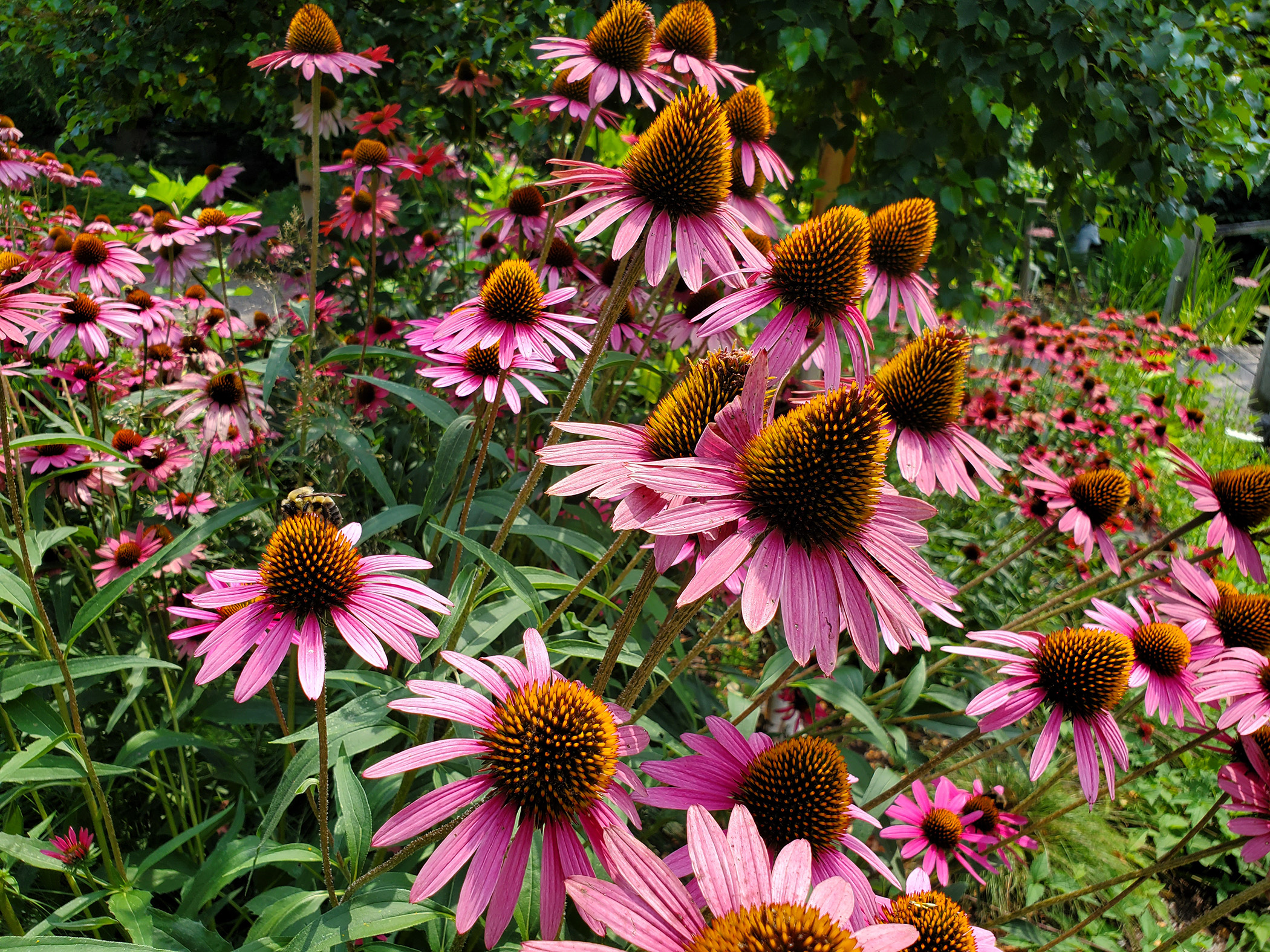
The more you know, the better when buying seed mixes for wildflower gardens. They may not contain seeds for native plants like the coneflowers shown here. Photo by Kristina Gabalski.