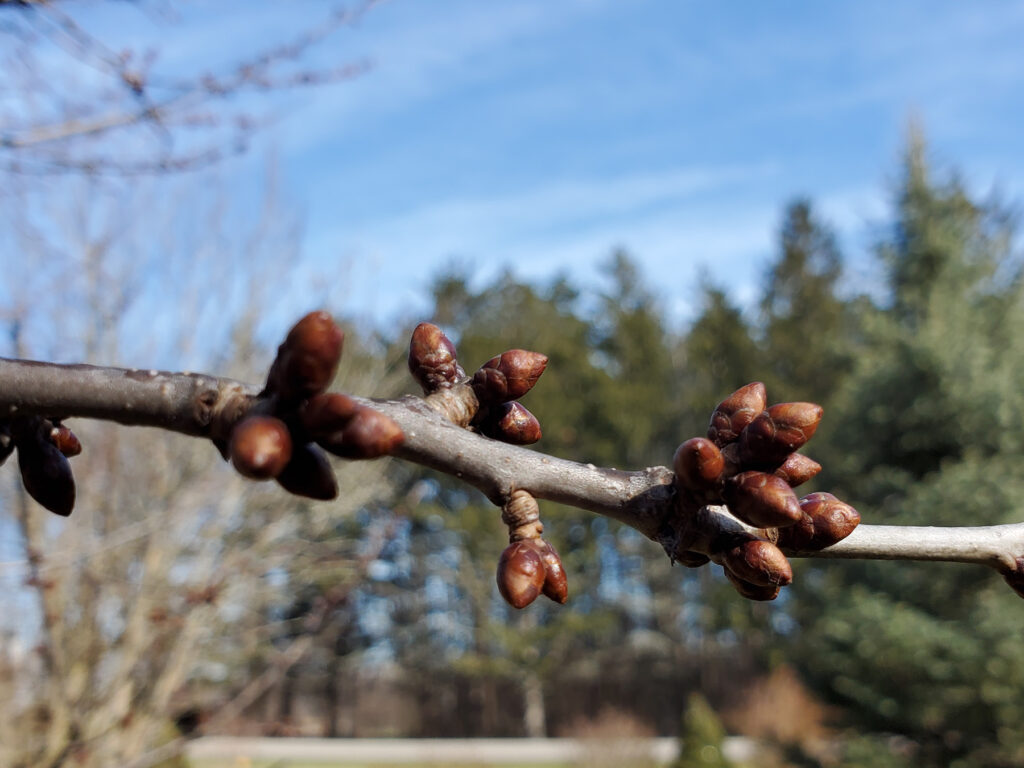
If this winter is testing your perseverance, just think about the buds that formed last summer on trees and shrubs. They are amazing structures made to withstand the snow, ice, and frigid temperatures of winter. According to northernwoodlands.org, plants withdraw water from buds before winter, which allows deciduous trees and shrubs to protect their buds from frost damage. When spring arrives, plants will pump water back into the buds to wake them up. If the weather allows, this can be an interesting time to study the buds on trees and shrubs in your yard. They truly are harbors of hope for better days to come.
You can slice open a bud and see the tiny leaves and flowers that are folded up inside. A magnifying glass can make this task easier. Some trees have separate buds for leaves and flowers, while others have both flowers and leaves curled up in the same bud. Forming buds late in the growing season allows trees and shrubs to begin growth quickly in the spring.
You will notice that most deciduous tree buds have overlapping scales to protect the tender leaves and flowers inside. Some plants like magnolias and butternut trees have fuzzy buds. The buds on my magnolia are very prominent all through winter.
Because of the diversity of colors, shapes, and sizes, you can identify trees and shrubs in the winter simply by studying their buds and the arrangement of buds on the stem. In red and sugar maples, lateral buds are in pairs opposite each other on the stem. In elms, side buds spiral up the stem singly. Red oaks have a cluster of buds at the end of their branches – a terminal bud with many scales and two or three slightly smaller laterals. Other lateral buds alternate up the stem, according to northernwoodlands.org.
Wildlife can damage buds by eating them. They are packed with nutrition and can be attractive to deer. Additionally, squirrels, songbirds, and other animals can consume winter buds. I have watched sparrows eat the flower buds on my forsythia – the impact on the bloom can be quite noticeable in the spring.
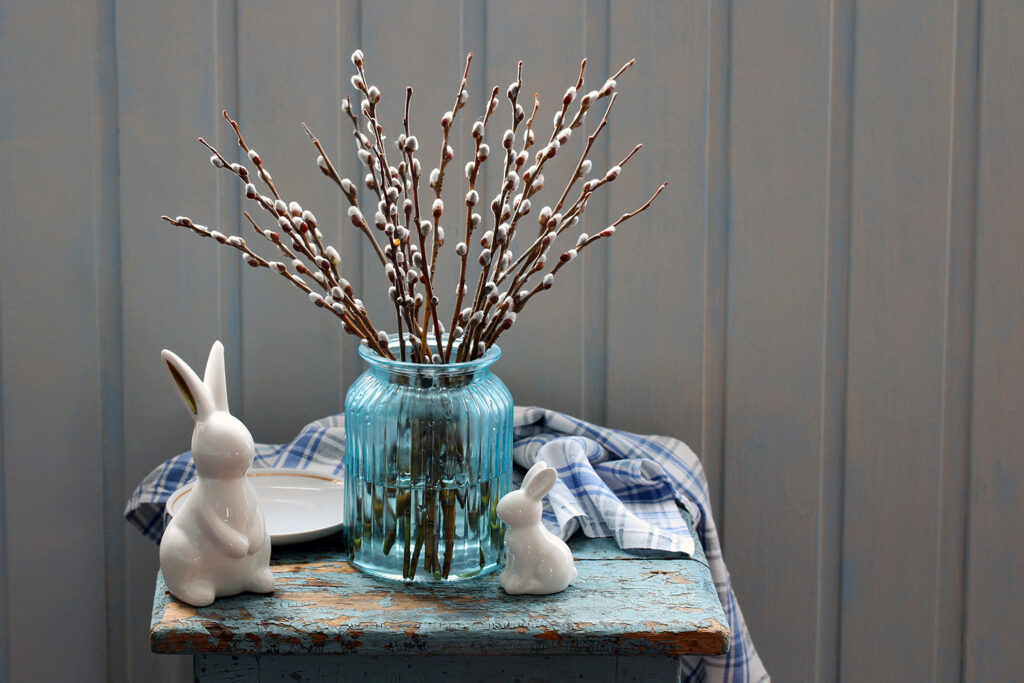
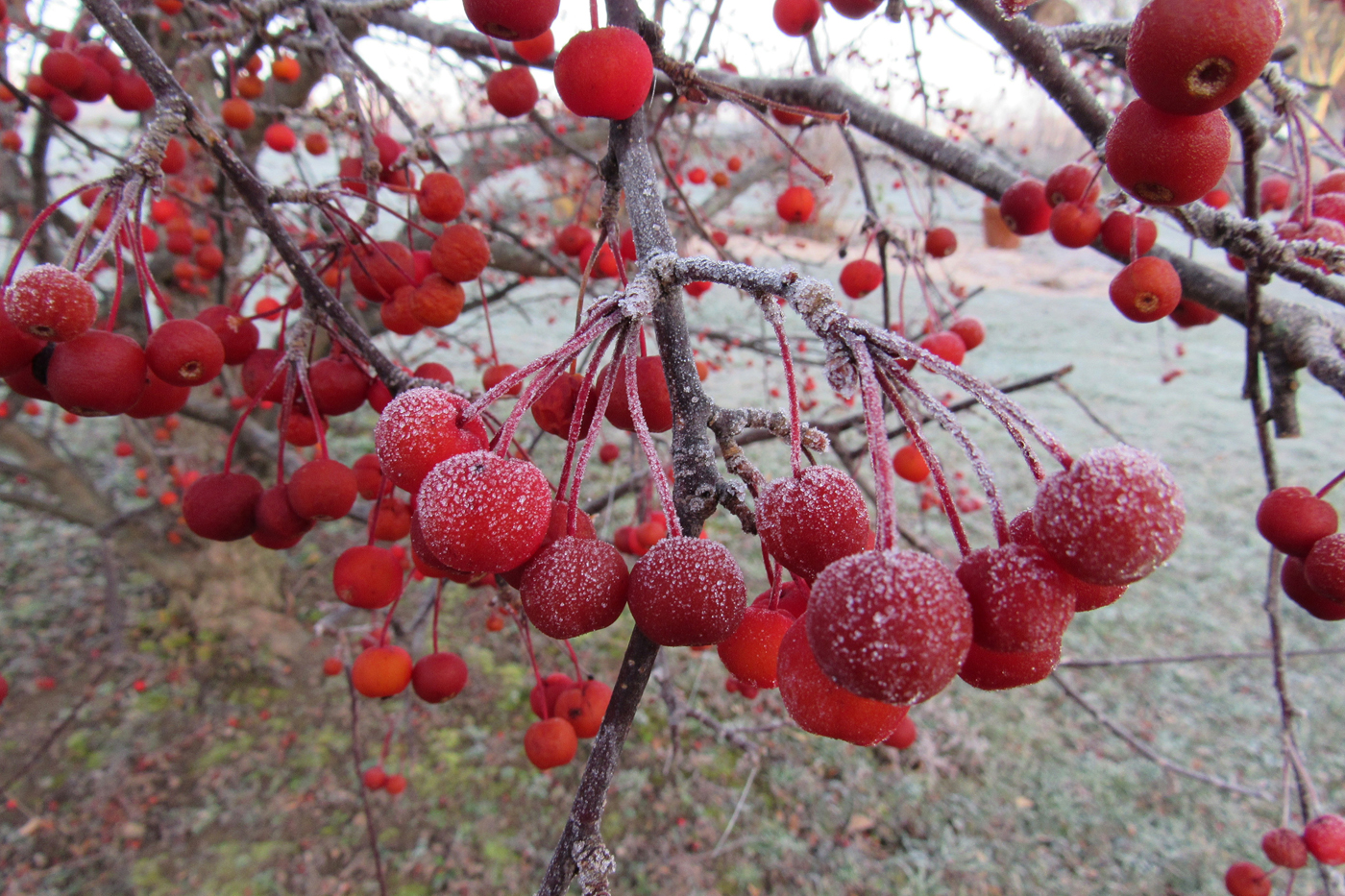
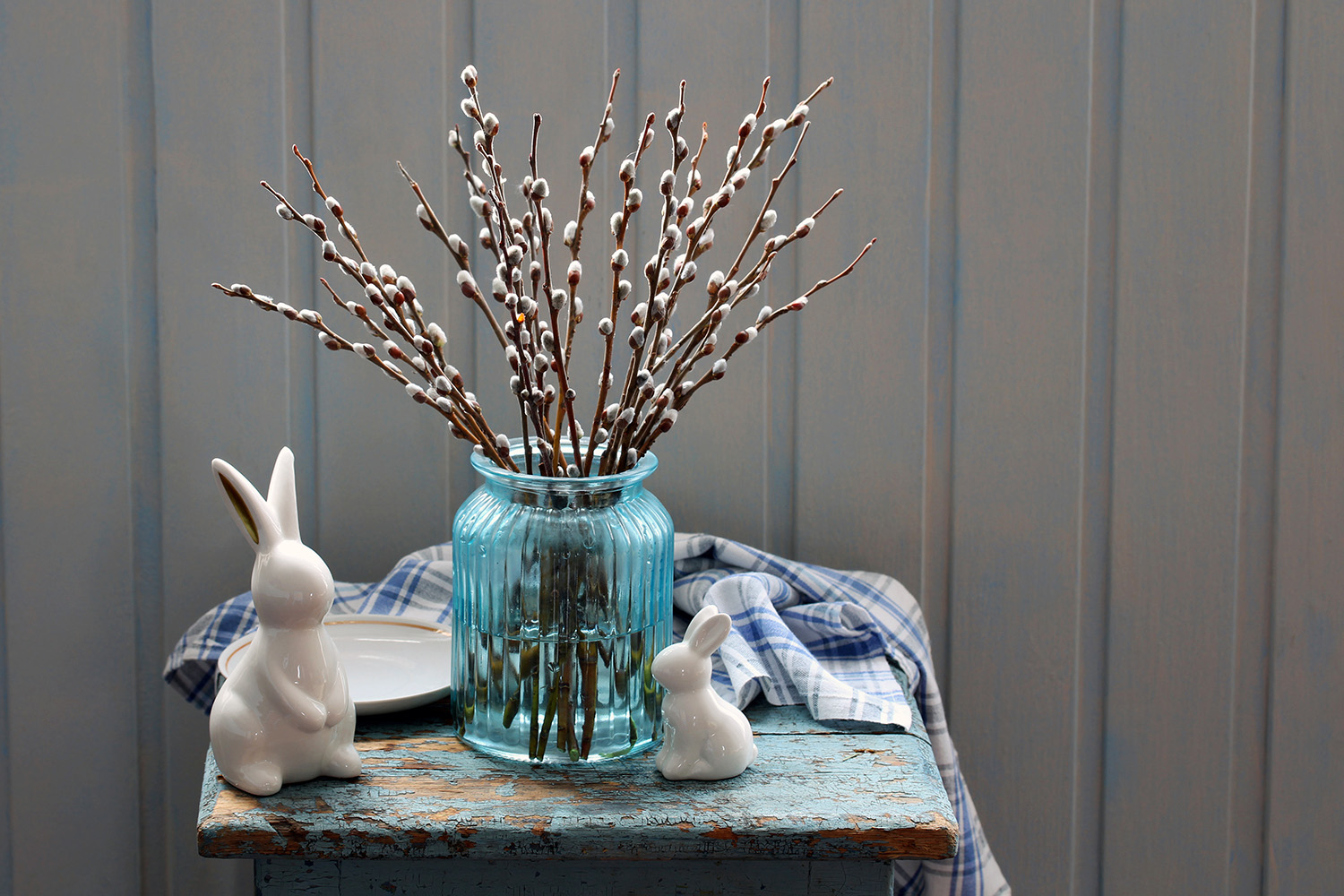
If you have forsythia, crabapple, witch-hazel, or pussy willows in your yard, you can cut budded branches and force them into bloom inside. Michigan State University Extension says taking cuttings closer to springtime (right now) makes it easier to force them into bloom.
Use sharp pruners to cut branches that are at least one foot long. Have a bucket of warm water with you and immediately put the cuttings in the water. To help branches take up water, you can cut a short slit up the bottom of the stem before placing it in the bucket.
When you bring the branches inside, place them in a cool place, such as the basement, that stays around 60 degrees Fahrenheit. Keep them out of direct sunlight, as that can dry out the branches and prevent blooms from opening. It can take two to five weeks, MSU says, for the branches to bloom. Change the water frequently, and misting the stems and buds with water can also help to keep them from drying out.
As the blooms begin to open, you can move the branches to a brighter location for display. Keeping them cool can prolong bloom time.